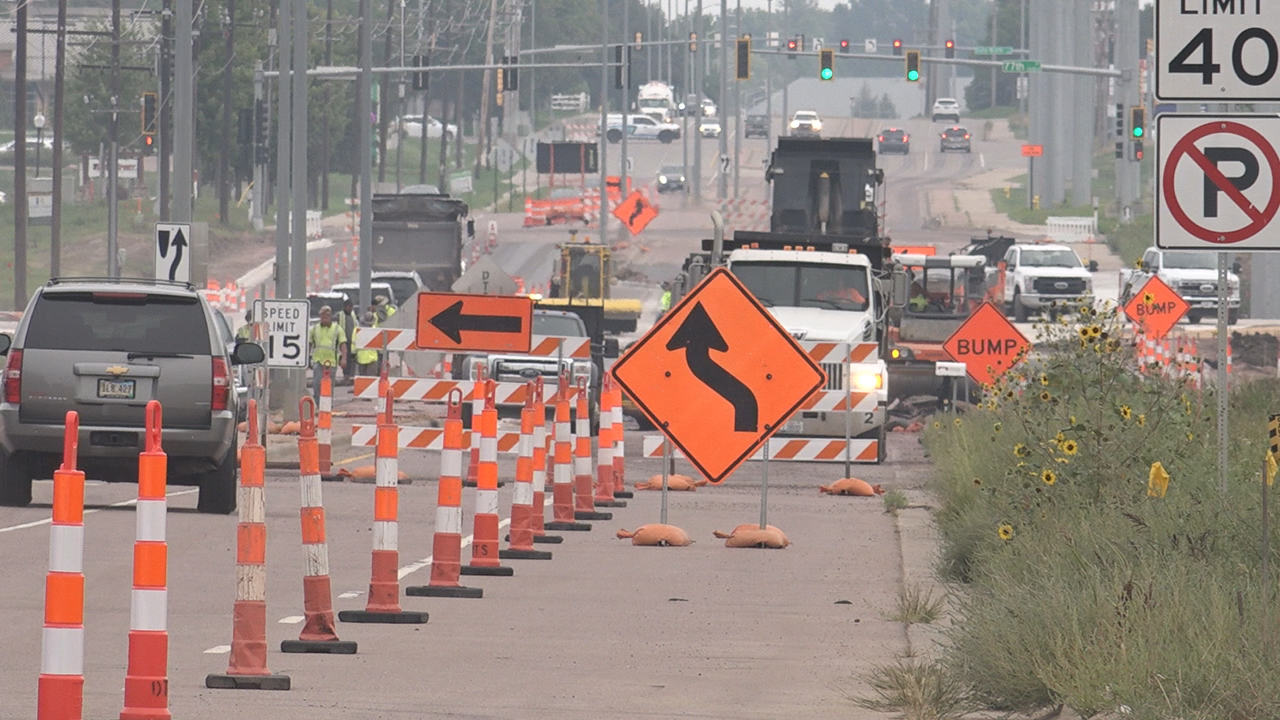

Sioux Falls Road Construction: A Necessary Investment for Long-Term Urban Growth
The City of Sioux Falls recently announced a series of road construction projects set to begin on October 20, 2025. Although these improvements might cause temporary travel disruptions, they represent a key commitment to better infrastructure and safer roadways for residents and visitors alike. In this editorial, we examine the announced projects, the practical impact on our daily commutes, and the broader implications for local economic growth, business activity, and community safety.
How Temporary Road Closures Impact Local Businesses and Commuters
Road construction has always posed tricky parts for cities, especially when vital streets and lanes close temporarily. For many local businesses in Sioux Falls—from industrial manufacturers to automotive service centers—the temporary closures mean potential delays in shipping and reduced access to customer traffic. At the same time, daily commuters must figure a path through diverted routes while balancing work schedules and family life.
It is important to appreciate that such projects, though challenging and sometimes nerve-racking, serve a larger purpose. They contribute to a better, safer urban transport network and offer long-term benefits that will eventually ease the daily commute and create a smoother traffic flow—benefits that are super important to the community and local economy alike.
Fresh Alternatives: Detours and Traffic Management Strategies
As the city embarks on these construction projects, drivers are urged to use caution, reduce speeds, and even consider alternate routes. The Dakota News Now article details how the City of Sioux Falls is proactively managing traffic by closing portions of streets and lanes on Cleveland Avenue, Veterans Parkway, Mandy Avenue, 69th Street, and Cliff Avenue during various timeframes. Although these changes may initially seem intimidating, they are designed to ensure that all workers and residents remain safe, minimizing accidents and confusion in the process.
The construction updates can be summarized for clarity:
- Cleveland Avenue: Closure of North Cleveland Avenue for a surface milling project will run from 8:00 a.m. to 5:00 p.m. on October 20, 2025, between 12th Street and 15th Street.
- Veterans Parkway: The inside southbound lane will be closed for concrete repairs near Madison Street, anticipated to last approximately one week, weather permitting.
- Mandy Avenue: The east-side sidewalk is undergoing accessible curb ramp repairs at Darcie and Rebecca Streets with pedestrians detoured to the opposite side.
- 69th Street and Solberg Avenue: A right-turn lane and north sidewalk closure will facilitate improved curb ramp access, with allowances for right turns from the through lane.
- Cliff Avenue: A lane and sidewalk closure commencing on October 21, 2025, to support approach work by Brooks Construction throughout a week-long period.
For drivers accustomed to routine paths, identifying and adapting to these alternate routes is essential. This might involve checking interactive radar maps provided by local agencies or utilizing smartphone navigation applications offering real-time traffic updates.
Repercussions for Traffic Safety: A Closer Look
Road construction zones can be laden with issues that are full of problems for unqualified drivers. Enhanced signage, road markings, and reduced speed limits are implemented to signal hazardous areas. Such measures are critical to ensure that drivers take extra precautions around work zones. Local authorities are working tirelessly to steer through the tricky parts that complicate traffic safety and to reduce the likelihood of accidents.
It is worth noting the following key safety measures during construction:
| Safety Measure | Description |
|---|---|
| Reduced Speed Limits | Drivers are asked to slow down near work zones to better react to rapid changes in traffic or sudden stops. |
| Detours | Clear signage and alternate routing are provided to guide drivers away from potential hazards. |
| Enhanced Signage | Bright and reflective signboards inform drivers about upcoming road works and lane closures. |
| Manual Traffic Control | In some cases, traffic officers might be deployed at key junctions to assist and direct drivers effectively. |
These improvements illustrate that while the changes may be off-putting in the short term, they are the result of careful planning to address the little twists that contribute to overall road safety.
Economic Implications and the Ripple Effect on Local Commerce
While many view these projects as minor inconveniences, the economic implications are much broader. Well-maintained roadways attract investments, facilitate trade, and empower local industries. Reliable infrastructure is a must-have for manufacturing supply chains, automotive servicing, and various small businesses that rely on timely deliveries. Delays and detours, though frustrating, often lead to longer-term growth, enhancing the city’s reputation as a safe and efficient business hub.
The extended benefits include:
- Improved Transportation Efficiency: Once the construction projects are completed, the flow of freight and commercial vehicles will be smoother, which is critical for industries with tight schedules.
- Enhanced Safety for Workers and Transport Operators: Reduced accident rates and better-planned traffic routes directly benefit labor, which is essential for businesses large and small.
- Business Tax Revenue: Improved infrastructure typically boosts tax revenues by increasing commerce, which can then be reinvested in further community development.
By investing in road repairs and upgrades, Sioux Falls is effectively laying down the groundwork for future economic expansion—a move that may require some sacrifice today but promises a stronger, safer community moving forward.
Navigating Construction Challenges: Driver Strategies for a Smoother Commute
For the everyday driver, these construction projects represent a series of twists and turns that can complicate familiar routes. Navigating safety and timing around these improvements might appear overwhelming, but there are specific strategies drivers can adopt to make their daily journeys more predictable and secure:
- Stay Informed: Keep up with regular local news alerts through Dakota News Now or city websites. Real-time updates can help you plan in advance.
- Plan Alternate Routes: Use map applications to identify alternative routes that bypass construction zones. This proactive approach can help avoid unexpected delays.
- Leave Early: Adjust your commute timings to allow extra travel time. Early departures and delayed start times can reduce the stress of potential traffic jams.
- Observe Traffic Signals: Pay extra attention to temporary signs and signals dictating speed limits and lane closures.
- Be Patient and Calm: Recognize that these improvements are only short-term hurdles paving the way for long-term benefits.
By implementing these tips, drivers can manage their way through the construction period without sacrificing safety or punctuality.
Planning Ahead: Long-Term Benefits of Infrastructure Investments
Long-term infrastructure investments are about more than just patching up old roads; they are about preparing for future growth. Sioux Falls, like many progressive cities, understands that the current discomfort from road closures is a stepping stone towards a more robust, efficient, and safe urban transport system. When roads, sidewalks, and lanes are regularly maintained and updated, the city fosters a healthier economic environment where businesses can thrive and residents can travel without undue worry.
The obvious outcomes of successful road projects include:
- Decreased Maintenance Costs: Regular updates prevent the need for extensive repairs in the future, saving the city valuable resources and taxpayer money.
- Enhanced Mobility: A well-connected road network boosts mobility for all, from local commuters to commercial fleets, contributing to a more dynamic city economy.
- Increased Safety: Updated infrastructure means fewer accidents and better conditions for both motorists and pedestrians.
- Boosted Property Values: Improved local infrastructure can lead to increased property values, benefiting homeowners and attracting new businesses.
While temporary diversions might seem daunting in the moment, it is the clarity of long-term planning—one that finds your way through current troubles—that ultimately pays off for both personal and community-wide economic aspects.
Community Impact: Balancing Inconveniences and Future Gains
City infrastructure projects are never without their competing interests. On one hand, they impose short-term inconveniences that include confusing bits of routing changes and off-putting speed adjustments. On the other hand, they represent well-meaning efforts to make urban life better. Community members, including commuters, business owners, and industrial operators, must take a closer look at both perspectives when evaluating the impact of these roadworks.
Some key community considerations include:
- Public Safety: Ensuring that every construction zone is managed with a focus on avoiding accidents is a top priority. This protects not just drivers but also pedestrians and local residents living near these routes.
- Environmental Factors: Modern road construction often includes environmentally friendly practices that reduce dust, noise, and overall disruption to local neighborhoods.
- Economic Boost: Businesses frequently realize that once construction is complete, the improved infrastructure attracts more foot traffic and enhances customer access to key commercial areas.
- Future-proofing: Smart urban planning means preparing for population growth and increased demand on local infrastructure, turning temporary challenges into long-lasting benefits.
This duality—balancing present struggles with future gains—is evident in vast urban redevelopment projects across the country. By taking an active role in understanding these improvements, communities can better appreciate that while the present may be tense, the future is bright.
Lessons from Past Urban Infrastructure Projects
When cities have previously worked through challenging road construction projects, the results have often been overwhelmingly positive. History shows that with well-managed traffic and clear communications, the temporary hurdles encountered during construction lead to roads that meet modern safety and usability standards. Sioux Falls, with its proactive approach, expects to be in good company with other similarly sized cities that have already reaped the benefits of such initiatives.
Some common lessons observed from past projects include:
- Effective Communication Is Key: Being upfront about the duration and nature of construction helps residents plan their schedules, reducing frustration and confusion.
- Investing in Quality Infrastructure Pays Off: Spending on robust designs and advanced materials guarantees that roadways remain functional longer, even when faced with heavy use.
- Public Involvement Improves Outcomes: Soliciting feedback from community members ensures that the most pressing local issues are adequately addressed in planning processes.
- Long-Term Economic Benefits: Areas with modern, reliable infrastructure tend to enjoy better economic prospects compared to regions that lag behind in upgrades.
Past successes lend hope and reassurance to the ongoing improvements in Sioux Falls. They remind us that while the current measures might require drivers to poke around for safe paths, the long-range payoff is well worth the temporary hassle.
Mini Case Study: A Snapshot of Sioux Falls’ Roadwork Projects
Let’s take a closer look at the details of the announced projects to see how each one contributes to overall urban renewal:
| Project | Date/Time | Activity | Expected Duration |
|---|---|---|---|
| Cleveland Avenue Surface Milling | October 20, 2025, 8:00 a.m. to 5:00 p.m. | Street closure for milling | Single day |
| Veterans Parkway Concrete Repairs | Starting October 20, 2025 | Inside southbound lane closure | Approx. one week (weather permitting) |
| Mandy Avenue Accessible Curb Ramps | Commencing October 20, 2025 | Sidewalk closure and pedestrian detour | Approx. one week (weather permitting) |
| 69th Street & Solberg Avenue Repairs | Effective October 20, 2025 | Lane and sidewalk closure for curb ramp work | Approx. one week (weather permitting) |
| Cliff Avenue Approach Work | Starting October 21, 2025 | Lane and sidewalk closure for lane reconstruction | Until October 28, 2025 |
This breakdown helps illustrate how each project, while individually disruptive, collectively works toward a cohesive upgrade of local infrastructure. City officials have emphasized that even though these measures might feel overwhelming in the moment, each project represents a necessary step toward a safer and more efficient transportation system.
The Role of Public Communication in Infrastructure Updates
Another important aspect to consider is how crucial it is for the city to relay updates and details about these projects promptly and clearly. With today’s digital age, information is at our fingertips, and residents can easily check local news websites, subscribe to traffic alerts, and follow social media updates from city officials. This effective public communication can help soften the blow of unexpected delays and make it easier for everyone to figure a path through these temporary changes.
Key communication strategies include:
- Regular Updates: Daily or hourly updates ensure residents stay informed about any changes or progress in the projects.
- Clear Signage: On-site signs and digital displays along affected routes provide real-time advice on speed limits and detours.
- Community Engagement: Town hall meetings or online forums offer citizens the chance to voice concerns and receive answers directly from city planners.
- Utilization of Technology: Advanced mapping software and traffic apps guide drivers more effectively even when the usual routes are under construction.
Through these channels, the city demonstrates its commitment to minimizing the confusing bits associated with ongoing road construction and reinforces its role as a trusted steward of public infrastructure.
Lessons for Other Cities: What Sioux Falls Can Teach Us
The approach taken by Sioux Falls provides valuable insights for other cities facing similar challenges. Many other urban centers are also working to update aging infrastructures and must confront the inevitable tangles that emerge along the way. The Sioux Falls projects serve as a case study for how multiple departments—from transportation and public works to communication teams—can work together to make necessary improvements while mitigating disruptions.
Some actionable lessons include:
- Coordinated Planning: When departments work in sync, the process of scheduling, executing, and updating on roadway projects becomes significantly smoother.
- Safety First: Emphasizing the importance of driver and pedestrian safety even if it means temporary delays pays off in the long run.
- Community Involvement: Including stakeholder feedback in planning ensures that the projects meet real-world needs of the local population.
- Utilization of Modern Technologies: Smart traffic management systems and digital communication channels can vastly improve project outcomes and driver experiences.
These lessons highlight that even when construction projects might seem intimidating or temporarily disruptive, a well-coordinated plan integrated with public communication can help smooth the edges and lead to successful outcomes that benefit an entire city.
Balancing Short-Term Challenges with Long-Term Progress
The mixed feelings that many drivers and entrepreneurs experience during construction projects are completely understandable. The short-term challenges—like having to find your way around unusual detours or dealing with unexpected waiting times—can feel overwhelming, especially for those on tight schedules. However, it’s important to remember that these are merely temporary conditions that pave the way for long-lasting improvements.
Here are some of the main points to keep in mind when grappling with such challenges:
- Short-Term Inconvenience: Temporary road closures and detours may add extra minutes to your daily commute, but safety and long-term efficiency are well worth the wait.
- Roadway Quality: Once the work is completed, smoother, more durable roads will benefit everyone—from everyday commuters to large freight operators.
- Urban Renewal: Enhanced infrastructure leads to increased property values, which in turn can bolster the local economy and generate additional revenue for public services.
- Resilience Building: Dealing with temporary issues today helps residents and businesses develop more flexible strategies for managing similar challenges in the future.
By taking a balanced view, it becomes clear that the temporary setbacks during road construction are, in essence, investments in a less complicated and safer future for all who call Sioux Falls home.
Embracing Change: Opportunities Amid Disruption
Every major infrastructure project brings with it a series of tangled issues that require the community to adapt. Staying adaptable and keeping an eye on the benefits is essential during these periods of transition. Rather than focusing solely on the disruptions, residents and businesses can also look at the opportunities that arise from such changes.
Opportunities include:
- Enhanced Safety Measures: New safety protocols could reduce accidents, leading to a demonstrably lower public safety risk in the long run.
- Modernized Urban Infrastructure: Upgraded roads and sidewalks not only look better but are also designed to meet current traffic demands and future growth.
- Business Advantages: For local businesses, improved infrastructure can result in increased customer accessibility and, over time, higher revenues.
- Increased Efficiency: With advanced planning and updated roadways, emergency services, public transportation, and commercial logistics can all enjoy smoother and faster operations.
This period of change is not just about dealing with temporary chaos but also about recognizing the myriad of benefits—both immediate and long term—that better roads can bring to an entire community.
Integrating Infrastructure Changes with Broader Urban Development
It is essential to view these road construction projects as one component of a much larger plan for urban development. Cities do not simply repair roads in isolation; they are also investing in technologies and systems that enhance community life. In Sioux Falls, these improvements are a part of a broader strategy aimed at supporting industries like manufacturing, automotive tech, and even emerging sectors such as electric vehicles.
Consider the broader picture:
- Industrial Manufacturing: Reliable roads ensure that critical parts, heavy machinery, and finished products move seamlessly between factories and distributors.
- Automotive Advancements: Upgraded road systems complement modern automotive technologies, both for traditional vehicles and for innovative electric models.
- Business Tax Laws and Economic Policy: Improved infrastructure can enhance local tax revenue, allowing the city to reinvest in other public services while potentially offering tax incentives to attract new businesses.
- Community Marketing and Public Image: A city that is visibly invested in making the daily commute safer and more efficient can market itself as a forward-thinking, business-friendly environment.
Therefore, even if the current road closures temporarily shift the usual routine, the integration of these improvements into the urban matrix is one of the key drivers of long-term regional prosperity.
Conclusion: A Path Forward for Sioux Falls and Beyond
In the grand scheme of urban development, the temporary pain of road construction is far outweighed by its long-term benefits. Sioux Falls is taking a significant step towards ensuring that its roadways, sidewalks, and public infrastructure are fully maintained and safe. Every lane closure, sidewalk detour, and temporary inconvenience is, in fact, a building block toward a safer, more efficient, and economically vibrant city.
While each project brings its own set of tricky parts and off-putting delays, the city’s diligent planning, effective public communication, and commitment to future-proofing the infrastructure are clear indicators that these efforts are not made in vain. In the end, as local businesses adjust, commuters plan alternate routes, and community leaders engage in open dialogue, the challenges will soon be replaced with smoother roads and a more modern urban landscape.
For the residents of Sioux Falls, the message is clear: embrace the change, plan ahead, and remember that today’s temporary detours are tomorrow’s express lanes to economic growth and improved day-to-day living. By approaching the situation with patience, foresight, and an open mind, every driver and business can find their way through these temporary disruptions, emerging on the other side with stronger, safer infrastructure to support the community for years to come.
This period is nerve-racking, no doubt, but it is also a powerful reminder that progress often requires us to tackle complicated pieces head-on, understanding that every twist and turn in the process is leading to a better, brighter future for Sioux Falls—and potentially serving as a model for other cities striving to modernize and thrive in our fast-changing world.
Originally Post From https://www.dakotanewsnow.com/2025/10/18/sioux-falls-road-construction-projects-affect-traffic-within-city-oct-20/
Read more about this topic at
Minnesota 511 Travel Information | MnDOT Map
Road and Weather Conditions – Safety Rest Areas & …
