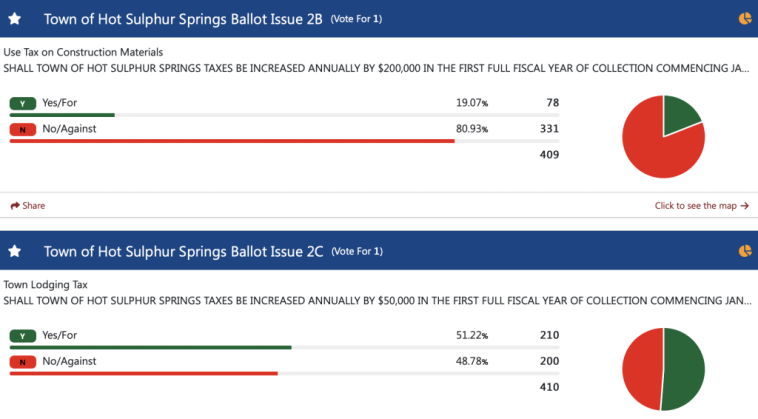

Overview of Hot Sulphur Springs’ Ballot Issues
Hot Sulphur Springs is facing two significant municipal proposals on its upcoming ballot that have sparked much local discussion. The proposals include a 4% use tax on construction materials and a change in how new ordinances are published in the local newspaper. In essence, residents will be casting their votes on whether to implement this tax for building projects and whether the town can list ordinance titles only, rather than printing the full text. Both issues have the potential to impact local development, municipal budgeting, and the overall transparency of government operations in this small town.
At first glance, these proposals may seem like simple administrative changes. However, they involve several tricky parts and tangled issues that reflect broader themes in local governance. For example, while the tax is designed to generate extra funds for municipal projects, it could also be seen as a hurdle for those submitting building permits. This op-ed aims to unpack the fine points of these proposals, review the possible benefits and challenges, and discuss what this might mean for both residents and the local construction industry.
Understanding the Proposed Use Tax on Construction Materials
The first ballot issue, often referred to as Ballot Issue 2A, asks residents if they support a 4% tax on construction materials. This tax would apply to those within town limits engaging in building projects and would be assessed during the building permit process. The intent is to raise funds—estimated at $100,000 or more annually—for use in municipal projects and community improvements.
For many residents, especially those in the construction industry, this proposal presents a nerve-racking challenge. However, it is important to look at both the small distinctions in how the tax is implemented and its potential benefits. Here are some key points regarding the tax proposal:
- Applicants would pay the tax upfront when applying for a building permit, based on their estimated cost of supplies.
- The tax is not intended to burden all residents but targets only those involved with building permits.
- Revenue generated would be dedicated to municipal purposes, possibly including infrastructure improvements and community services.
Many community members have expressed uncertainty about this tax due to confusing bits in the public messaging. Some residents mistakenly believe that everyone will have to pay the tax; however, clarification from town officials indicates that it is specifically directed at construction permit applicants. Addressing these misconceptions is super important to ensure that stakeholders fully understand the proposal.
Examining the Title-Only Ordinance Publication Proposal
The second proposal, designated as Ballot Issue 2B, centers on amendments to the current method of publishing town ordinances. In a bid to reduce what many see as an overwhelming volume of municipal documents, the town is considering publishing only the title of new or proposed ordinances in the local newspaper. The full text of these ordinances would be made available at the town hall for residents to review during normal business hours.
This measure is being proposed in light of the new 230-page Land Development Code the town is set to adopt. Given the sheer volume of text, printing the complete document in the newspaper would be a physically and financially challenging process. By listing the title only, the town aims to keep residents informed while managing printing costs and logistical twists and turns that come with disseminating lengthy documents.
Critics of this measure claim that reducing the amount of public information in the paper could be seen as off-putting to those who rely on the newspaper for detailed local government updates. Proponents, however, argue that it is a practical solution that balances accessibility with efficiency. As local officials work through the process of implementing these changes, the fine points of how easily residents can access full texts at the town hall remain a key topic for ongoing discussion.
Implications for Local Residents and the Construction Industry
The introduction of a construction materials use tax and a modified ordinance publication method affects multiple stakeholder groups. Both proposals have direct implications on local residents, particularly those involved in construction and local business. The following are some of the potential implications to consider:
- Impact on Construction Permit Applicants: Those applying for building permits will need to account for the extra 4% tax on construction materials. For small-scale projects, these additional costs might be manageable, but for larger jobs, even a small percentage increase can translate to a significant addition to overall project expenses.
- Clarity in Public Communications: The proposal to publish ordinances by title only requires that residents actively visit the town hall to review complete texts. This change could result in some residents missing crucial details unless the town also emphasizes alternative means of accessibility, such as digital archives or public meetings.
- Broader Community Budgeting: With anticipated annual revenues estimated at $100,000 or more, the new tax could provide the town with a steady source of funds for municipal improvements. This might benefit everyone in the community by supporting essential services and infrastructure projects.
For many residents, understanding these proposals means grappling with a number of confusing bits and complicated pieces of local policy. In addressing these issues, hot-button concerns about transparency, fairness, and fiscal responsibility come to the fore. Residents and business owners alike will need to figure a path through these proposals to decide how they believe their local government should raise and allocate funds.
The Budget Forecast: Expected Revenue and Its Uses
A closer look at the anticipated revenue from the 4% use tax on construction materials shows that even modest increases in construction activity could yield significant funds for Hot Sulphur Springs’ municipal budget. The projected annual revenue of about $100,000 is a figure that town officials suggest could grow as more construction permits are issued.
This revenue stream could be used to finance a variety of public projects, such as:
- Upgrading and maintaining local infrastructure, including roads and public utilities
- Improving community facilities like parks, town halls, and public safety buildings
- Funding economic development initiatives that could attract new businesses and support existing ones
- Enhancing local services and emergency response capabilities
The table below outlines a hypothetical breakdown of how the additional funds could be allocated:
| Area of Investment | Possible Allocation | Benefits to the Community |
|---|---|---|
| Infrastructure Upgrades | $40,000 | Improved roads, connectivity, and public safety |
| Public Facilities | $25,000 | Modernized community centers and emergency services |
| Economic Development | $20,000 | Support for small businesses and job creation |
| Miscellaneous Projects | $15,000 | Funds for unanticipated community needs |
Although these figures are illustrative, they demonstrate the key role that even a modest tax increase could play in local government budgeting. Understanding the fine details of revenue allocation helps communities appreciate how such measures, despite their intimidating starting points, could result in tangible improvements for everyone.
Potential Confusions and Misunderstandings Among Residents
Whenever new policies are proposed, there is always a possibility of misunderstandings among residents, and these proposals are no exception. One common source of confusion centers around who will be affected by the construction tax. Many residents have voiced concerns that the tax might extend to individuals not involved in construction activities.
In reality, as explained by the town clerk, the tax is targeted solely at those submitting building permits for construction-related projects. This clarification is key to ensuring that only the relevant parties bear the costs associated with local development.
Furthermore, the shift to a title-only ordinance publication system may create uncertainty about public access to complete legislative details. Without clear communication from municipal authorities, residents could end up with a nerve-racking feeling of being left in the dark regarding important regulatory changes.
Addressing these confused bits early on is essential. A few strategies to reduce misunderstanding might include:
- Hosting public forums or town hall meetings where residents can get a closer look at what the changes entail
- Distributing detailed guides and FAQs that articulate who is affected and how the processes will work
- Enhancing digital access by creating an online portal to view full ordinance texts or build an archive
Transparency is a must-have element when implementing these proposals. Clarity in communication helps residents work through their skepticism and build trust in the decision-making process.
Local Government Transparency and Public Engagement
In addition to the fiscal and operational impacts of these proposals, there is a broader question about government transparency and public engagement. Moving to a title-only system for ordinance publication raises critical questions about how effectively the local government communicates with its citizens.
Here are some considerations to think about:
- The full text of each ordinance will remain accessible at the town hall, but this may not be convenient for all residents.
- Residents who do not have easy access to the town hall will need alternative channels, such as online repositories or scheduled public review sessions.
- It is important for the local government to ensure that the methods used to display and share the full ordinances are open, transparent, and user-friendly.
In this context, it may be helpful for municipal leaders to develop multiple pathways for public information. For example, digital archives could serve as a supplement to physical copies held at the town hall. Additionally, engaging local media in community outreach can help bridge the gap between government administration and public awareness. Such measures would help residents make well-informed decisions when casting their ballots.
Ultimately, the success of these proposals depends not only on their design but also on the town’s ability to communicate clearly and effectively. This is especially true in small communities where every resident’s voice can have a significant influence on local policy.
Impact on Local Government Budgeting and Infrastructure Development
The introduction of the construction materials tax is more than just a new fee—it is a strategy designed to shore up municipal financing for much-needed infrastructure and public services. In many small towns, local governments frequently face tricky budget adjustments and have to figure a path through competing funding priorities.
The proposed tax can be evaluated in terms of its long-term benefits versus the immediate cost increases for construction permit holders. In assessing these trade-offs, several key factors must be addressed:
- Predictability of Revenue: With a consistent tax rate in place, the town can forecast future cash flows more reliably, which is crucial when planning large infrastructure projects.
- Economic Stimulation: Additional funds could be reinvested in community projects that stimulate local economic growth, from road repairs to utility upgrades.
- Financial Stability: A steady revenue stream helps mitigate volatile income fluctuations that small municipalities often experience, particularly in periods of economic downturn.
When examining these factors side by side, the proposed tax may prove to be a beneficial tool for maintaining and improving community infrastructure—so long as its costs are carefully managed and communicated. Local policymakers must engage in a balanced discussion that weighs these benefits against the potential for increased expenses on individual projects.
Balancing Business Interests with Municipal Needs
For those in the construction industry and local business owners, the proposals signal a need to adjust their planning strategies. While the extra tax on construction materials may seem intimidating at first, it can also offer business owners clarity on the cost structure for projects. In the long run, knowing precisely what fees to expect can assist in budgeting and pricing construction contracts.
Businesses may also need to consider how this proposal fits into broader economic trends and government policy changes in small towns. The key issues here include:
- Clarifying which segments of the construction industry are affected and how the tax is applied in differing scenarios.
- Understanding the administrative process of building permits when an upfront tax is involved, along with any refund mechanisms post-construction.
- Evaluating whether the tax might inadvertently slow down construction activity, which could have mixed economic effects on local job creation.
Business leaders must steer through these issues by engaging in proactive dialogue with municipal officials. Several steps can help in this process:
- Participating in local government meetings to voice concerns and obtain clarifications.
- Collaborating with trade associations to develop clear guidelines for accounting the tax costs.
- Staying informed about additional changes in municipal policy that may influence construction projects.
By working together with the local government, business owners can find ways to absorb the new costs while still contributing to the community’s overall development efforts. In doing so, they can help shape a policy environment that benefits both the construction industry and municipal growth.
Strategies to Reduce Misunderstandings and Boost Engagement
Given the potential for misunderstandings, municipal leaders have a responsibility to employ strategies that make these policies accessible to all residents. Here are some actionable measures that can help:
- Clear Communication Materials: Distribute well-organized brochures, FAQs, and emails that explain the tax and ordinance publication changes in simple language.
- Public Workshops: Host community meetings and training sessions at the town hall to take a closer look at the proposals and answer residents’ questions.
- Online Accessibility: Develop a user-friendly online portal where residents can easily retrieve the complete text of ordinances and read detailed explanations about the new tax.
- Feedback Channels: Create dedicated email addresses or hotline numbers where residents can share their thoughts and report any areas of confusion.
In addition to these strategies, building a sense of trust between residents and local government is essential. When residents feel informed and included in the process, they are much more likely to support initiatives—even those with some intimidating or nerve-racking aspects at first glance.
Exploring the Broader Impact on Municipal Policy and Community Development
Beyond the immediate fiscal impacts, the proposals in Hot Sulphur Springs illustrate a larger trend in local governance—one in which municipalities are increasingly relying on targeted fees and revised communication methods to fund community development. Many small towns across the country are similar in that they must find innovative ways to raise money without overburdening their residents.
Some broader implications include:
- Shifts in Revenue Collection: Municipalities that have faced budget shortfalls are exploring various revenue-raising measures. A construction materials tax may be just one example among many innovative approaches.
- Enhanced Public Participation: When voters are given a direct say in tax decisions, it encourages a more active engagement with local governance. This heightened participation can lead to more responsive and responsible policy-making over time.
- Modernization of Public Communications: Adjusting how ordinances are published represents an effort to adapt to the digital age, where information is often accessed online rather than via traditional print media.
These larger trends suggest that although changes like these may appear on the surface as routine administrative updates, they are actually part of a dynamic process through which local governments are learning to manage tricky and tangled issues in a modern context. As small towns face competitive economic environments, innovative revenue solutions coupled with transparent communication can become key assets in future planning.
Charting a Course for Future Policy Adjustments
Looking ahead, Hot Sulphur Springs’ ballot proposals could pave the way for more comprehensive discussions on municipal budgeting and governance. Future policy adjustments might explore other areas where streamlined production of public documents and refined tax policies could benefit the community without creating undue burdens.
Some areas for potential future review include:
- Digital Transformation Initiatives: Enhancing online services so that detailed legislative texts are readily available to everyone.
- Refinement of Permit Processes: Simplifying the building permit process in parallel with new tax policies to reduce any overall off-putting financial or procedural burdens.
- Broader Fiscal Reviews: Conducting regular reviews of municipal taxes to ensure they remain fair, clear, and effective in supporting community goals.
- Enhanced Public Outreach: Implementing long-term strategies for civic education about municipal policies, ensuring that residents are consistently in the loop.
Adopting a forward-thinking approach means that local officials must be open to changing strategies as needed. This involves not only collecting input from residents but also staying informed about best practices from similar towns and adapting their approaches to the local context.
Finding Your Way Through the Small-Town Government Maze
In many respects, the situation in Hot Sulphur Springs mirrors challenges faced by numerous small towns around the country. Navigating municipal policy changes can be a nerve-wracking process filled with little twists and slight differences that require careful attention. However, these changes also offer opportunities for the community to work together, develop common understandings, and forge a path toward financial stability and improved public services.
Here are a few ways residents can take an active role in working through these proposals:
- Stay Informed: Regularly attend town hall meetings, read local newsletters, and check online portals for updates on the proposals.
- Engage in Dialogue: Participate in community forums where local officials discuss the tax and ordinance changes, and ask questions to clarify any confusing bits.
- Provide Feedback: If there are concerns regarding how these policies are being implemented, voice them through official channels to ensure decision-makers have a clear picture of constituent sentiment.
- Monitor Implementation: After the proposals take effect, keep an eye on how the funds are allocated and how effectively ordinances are communicated, ensuring accountability from local officials.
By actively engaging in these processes, residents can contribute to a smoother transition and help ensure that local government decisions are tailored to the community’s needs.
A Closer Look at the Fine Points of Community Impact
While both proposals come with their own set of challenges, the potential rewards should also be considered. The use tax on construction materials, if approved, could be a super important tool in stabilizing the municipal budget and underpinning future community improvements. On the other hand, the move to title-only ordinance publication seeks to modernize communication without sacrificing access to full legislative details.
Looking at the possible benefits, consider these positive outcomes:
- Enhanced Infrastructure: With additional revenue, the town can invest more heavily in critical infrastructure projects, such as road repairs and public safety improvements.
- Easier Policy Updates: Streamlining the public communication process can reduce printing burdens and, if coupled with digital solutions, lead to faster dissemination of policy changes.
- Community Empowerment: By actively involving residents in decision-making through direct ballot measures, the community’s voice is amplified, helping to foster a sense of ownership in local governance.
- Fiscal Responsibility: A transparent tax mechanism can increase trust in local government when residents see that the funds are allocated responsibly for public benefits.
These potential benefits underline that while the task of implementing new policies might be filled with twists and turns and even seem overwhelming at first, the outcomes could be quite positive if managed well. It is crucial that the local government takes the time to explain the subtle parts of these proposals, helping all stakeholders to understand the nitty-gritty and make well-informed decisions.
Community Voices and Diverse Perspectives
One of the key elements that will determine the success of these measures is the manner in which community voices are heard and valued. Sometimes, the challenging aspects of new policy—such as the upcoming construction tax and streamlined ordinance publication—can feel overwhelming or off-putting to some parties. However, a full and balanced discussion that involves perspectives from residents, business owners, and construction professionals can pave the way for more acceptable solutions.
Some community members might feel that a tax of any kind adds an extra layer of expense, while others view it as a necessary fund for the betterment of public services. It is important for local leaders to host debates and community forums that offer space for all these opinions. Such discussions can help distill the slight differences in viewpoints into practical steps forward.
The following table summarizes some common community perspectives:
| Group | Concerns | Potential Benefits |
|---|---|---|
| Construction Professionals | Impact on project costs and permit processing | Clear fee structures and improved municipal services replacing outdated infrastructure |
| Small Business Owners | Confusion over tax applicability and information access | Stable local government budgeting and enhanced community services that support economic growth |
| Local Residents | Perception of reduced transparency with title-only publications | Improved public infrastructure and accessible channels for legislative texts |
| Municipal Officials | Balancing new revenue sources with public expectations | Opportunities for updating communication strategies and enhancing civic engagement |
This snapshot underscores the importance of managing your way through these changes with clarity and openness. By acknowledging varied viewpoints and addressing confusing bits head on, the municipality can help ensure that the new policies ultimately work for everyone.
A Balanced Perspective on the New Municipal Proposals
In conclusion, the upcoming ballot in Hot Sulphur Springs represents more than just a yes-or-no vote on two individual proposals—it is a microcosm of the challenges that small towns face in today’s rapidly changing fiscal and administrative environments. Residents have been asked to consider a construction materials tax that, while potentially increasing project costs, could provide essential, stable revenue for the community. Simultaneously, the town is considering a streamlined method for publishing ordinance information that aims to balance practicality with openness.
While there are undoubtedly tricky parts and tangled issues involved in this policy shift, the proposals also offer a real opportunity for municipal modernization and enhanced public service. By taking into account the fine points of both proposals and providing clear, transparent communication, the local government can help residents steer through the potential pitfalls and take advantage of the benefits that these measures promise.
As Hot Sulphur Springs moves towards the November 4 vote, it is critical that all parties remain engaged, dig into the details, and provide constructive feedback. Only by working together—residents, business owners, and municipal officials alike—can the community ensure that the chosen path promotes fiscal responsibility, transparent governance, and ultimately, a better quality of life for everyone living in this close-knit town.
This balanced approach, weighing both the essential benefits and the nerve-racking challenges, will serve as a model for small municipalities across the country. By embracing innovative solutions and improving communication channels, towns like Hot Sulphur Springs can set themselves on a course toward sustainable growth and a more engaged citizenry.
Final Thoughts: Moving Forward Together
The proposals before voters in Hot Sulphur Springs encapsulate a broader conversation about public finance, administrative transparency, and adaptive governance. While the immediate changes may appear overwhelming due to their complicated pieces and subtle parts, ultimately, they offer a framework that could unlock new opportunities for community progress.
Residents are encouraged to learn every little detail, participate in discussions, and provide feedback to local officials. Whether you are a construction professional feeling the direct impact of the new tax, a business owner concerned about municipal communications, or simply a local citizen interested in the town’s future, your active involvement is a key component in shaping policy.
In this era of change, where small towns must find their way through tricky fiscal landscapes, it is the joint effort of the entire community that will ensure these measures work to uplift the town as a whole. Let us use this vote as an opportunity to take a closer look at how our local government can better serve all segments of our society, all while balancing fiscal responsibility with transparency and fairness.
The next few months will be critical as Hot Sulphur Springs debates these proposals and their implementation details. By fostering a dialogue that is inclusive and informed, the municipality can transform challenging, nerve-racking policy decisions into stepping stones for long-term community success.
Ultimately, this ballot is not just about a tax or a publication method—it is about investing in the future of a community that values progress, openness, and collective impact. As we take the wheel and work through these proposals together, let’s remember that every small step toward improved governance contributes to a stronger, more resilient town ready to face whatever twists and turns the future might bring.
Originally Post From https://www.skyhinews.com/news/hot-sulphur-springs-asks-for-vote-on-construction-tax-and-ordinance-change/
Read more about this topic at
What is the Real Property Tax Cap? | Office of the New York …
Mayor Adams Unveils “Axe the Tax for the Working Class …
